What came back
57 material changes, every clause quoted, a flag on each one.
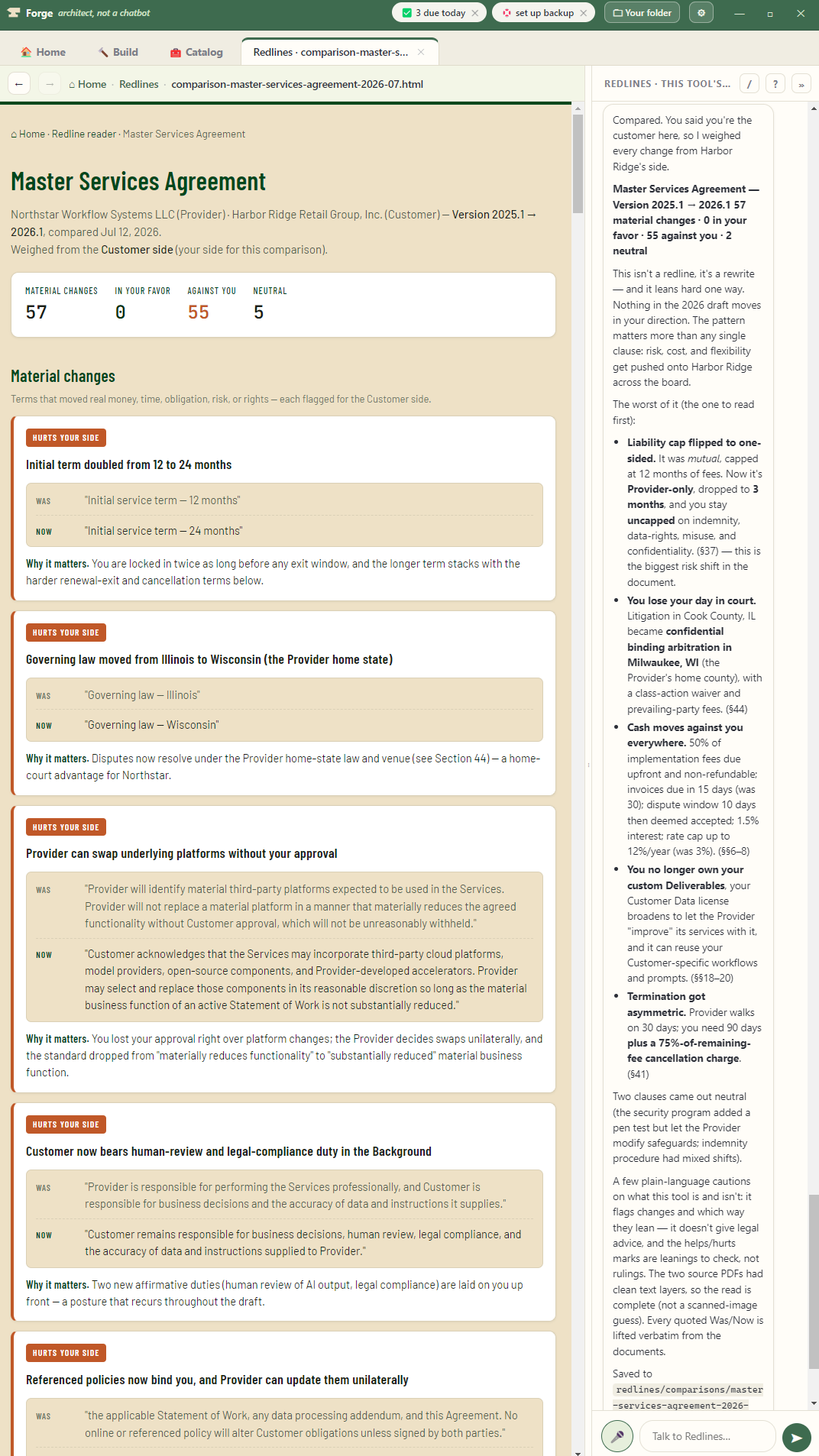
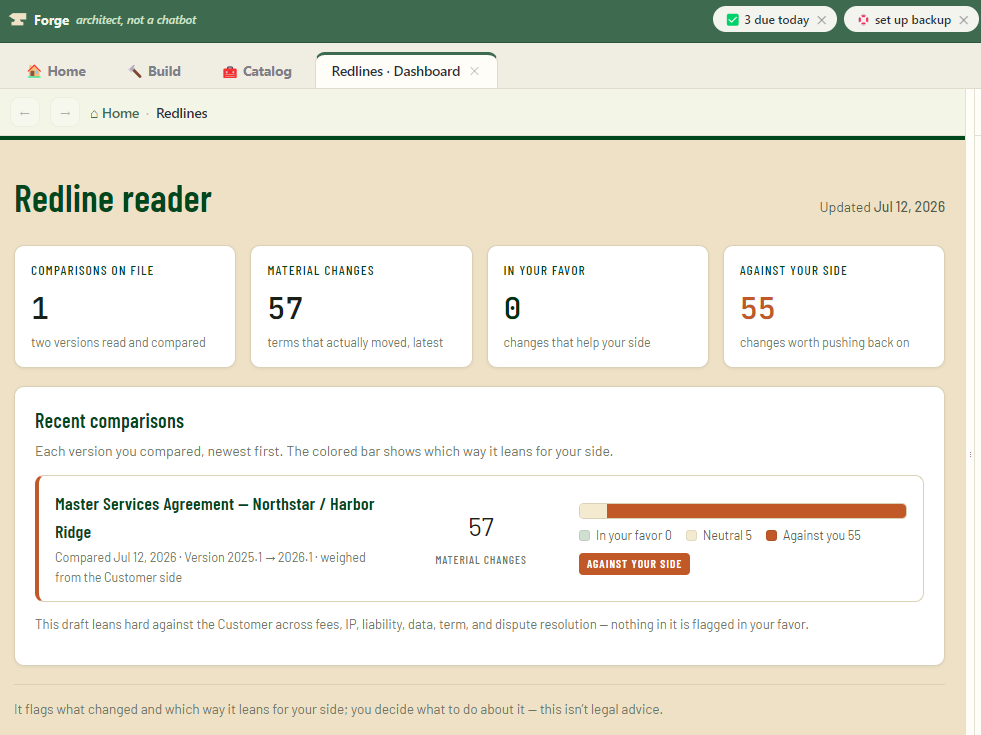
About ninety minutes later (it reads every clause of both versions — this is the slow, careful kind of work, and it says so up front): a full readout. 57 material changes, each with the old clause and the new clause quoted word-for-word, one plain sentence on why it matters, and a helps / hurts / neutral flag weighed from my side. Plus a dashboard, and a summary that led with the single worst change in the document.
Graded against the answer key:
- It caught the trap. Flagged the response-time change as hurts, with the exact reasoning: "a production outage outside support hours has no committed response." That's reading for meaning.
- It caught every headline change — the liability cap quietly flipping from mutual to one-sided and shrinking from 12 months of fees to 3; ownership of custom deliverables disappearing; the term doubling with a 75% cancellation charge; court replaced by arbitration in the other side's home county. It independently called the liability-cap flip "the single biggest risk shift in the draft." That was the correct call.
- It found real changes the answer key itself missed — the force-majeure clause quietly becoming one-sided, with the customer's termination right deleted.
- Every quoted clause checked out verbatim against the source documents.
- It kept the noise out. Date stamps, version numbers, and formatting churn were filed as cosmetic — not padding the material list, not hiding the money clauses.
The honest miss
The one customer-favorable plant. It found the change and named both benefits, but flagged it neutral instead of favorable — it weighed a soft "provider may modify safeguards" rider as canceling the concrete wins. Defensible, but conservative. I told my Forge to adjust how the tool weighs concrete benefits against soft riders. That took one conversation, and the adjustment is now part of the tool. That's the part no off-the-shelf product does: when this tool gets something wrong, you tell it, and it's better on the next contract.
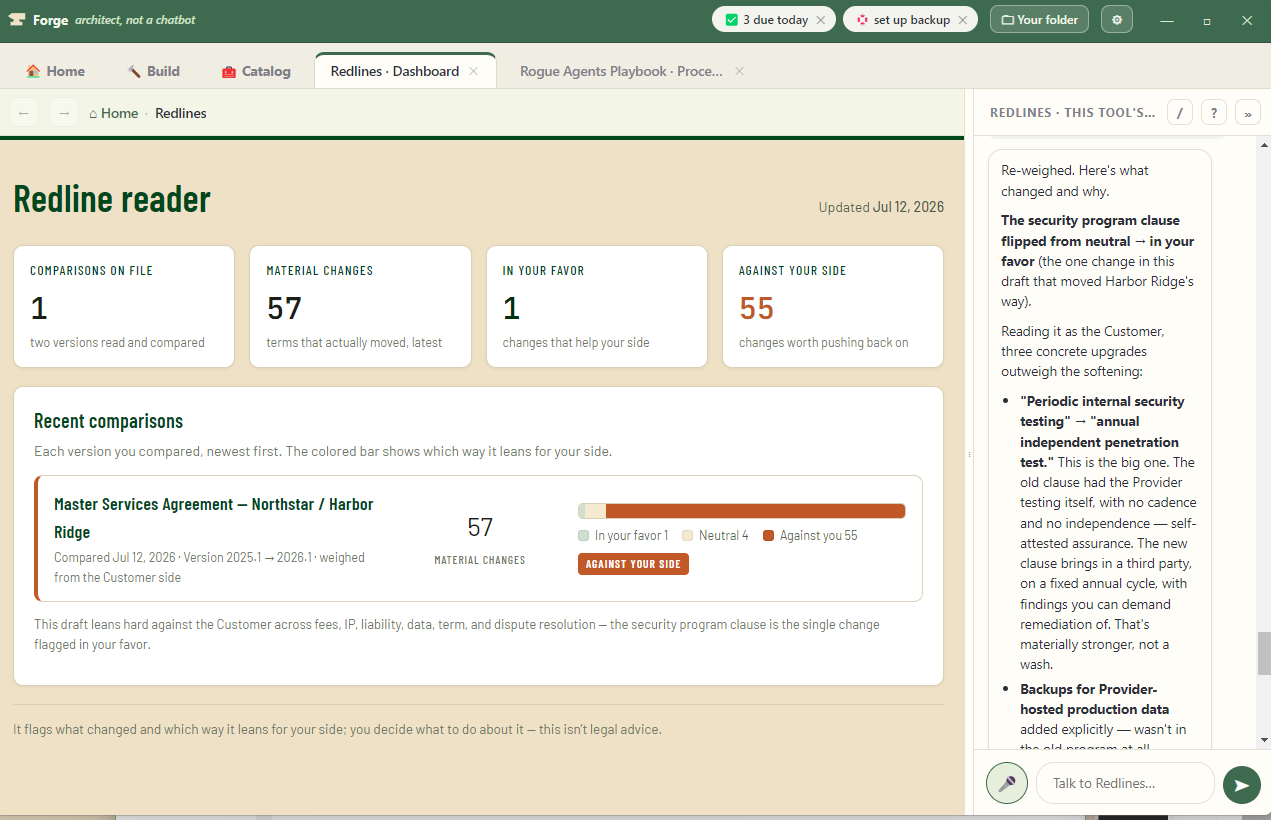
And here's the proof it stuck. After the adjustment I asked it to re-weigh that clause — same document, one request. It flipped the flag on its own and told me why: "the old clause had the Provider testing itself, with no cadence and no independence. The new clause brings in a third party, on a fixed annual cycle, with findings you can demand remediation of. That's materially stronger, not a wash." The dashboard now reads 1 in my favor — the plant, found:
Anyway. It worked great, I loved it, and it's genuinely useful — so I put it in the catalog. It's part of the Heavy Machinery shelf now: included with the Professional membership, whether that's your own seat, or every seat in your business or nonprofit.